Lukas Wallrich · Birkbeck, University of London
Visiting Lecturer · SWUFE School of International Business · May 2026
Today, in three parts
Chunk 1测量文化
The frameworks. Hofstede, GLOBE, tightness–looseness. Why people tried to measure culture, and what they found.
Chunk 2应用
Applying them. A prediction game: can the numbers tell you what's going on in the room?
Chunk 3局限
What frameworks miss. Critiques, the institutional lens, and a Brazil case to test what we've learned.
Before we begin
Reflection 1反思
Have you started? You only need to submit three at the end — but writing about every session gives you choice and helps you learn.
Presentations小组报告
Groups and case topics are distributed at the end of today's session.
The waterline水线
Remember the iceberg? When we discuss HR practices, ask: above or below?
Chunk 1 of 3 · ~45 min
Can we measure culture?
Three attempts — and what each one was actually trying to do.
Why try to measure it at all?
Comparison. If two countries differ, by how much on what?
Prediction. Will this HR practice transfer — or will it break?
Diagnosis. When something fails abroad, which difference might explain it?
Every measure is a simplification. Always consider what it misses.
Cultural dimension
文化维度
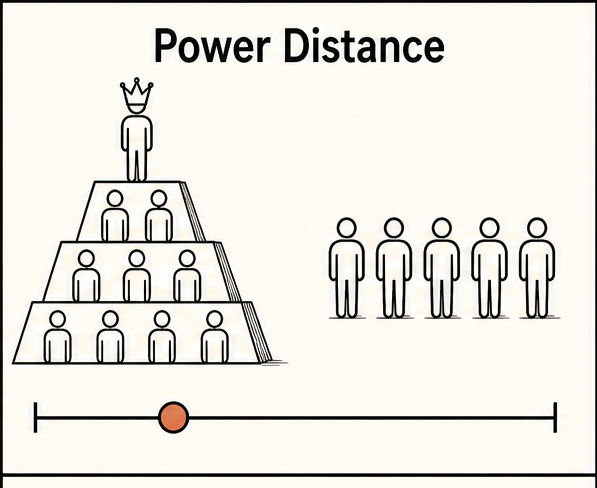
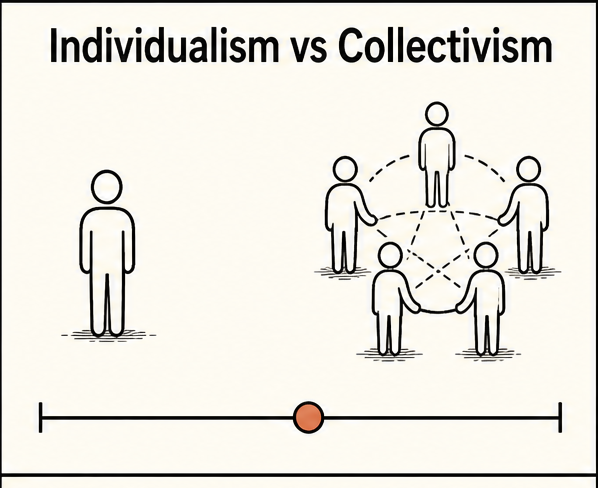
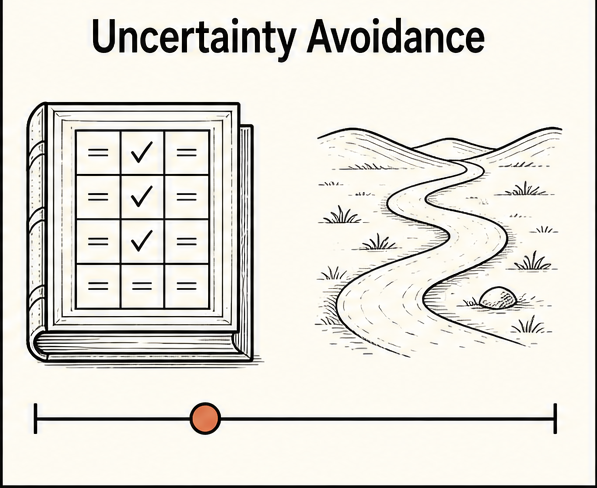
A continuous axis along which national groups are claimed to differ on average — e.g., how much hierarchy is expected, how comfortable people are with ambiguity. A way of turning a fuzzy concept into a number you can compare across borders.
Hofstede's six dimensions
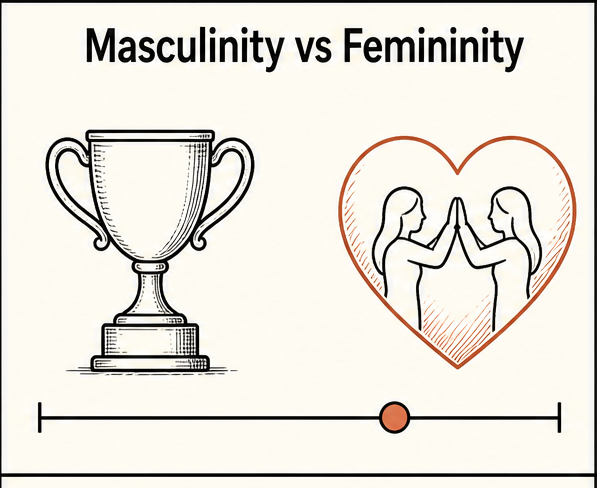
Achievement vs Care
prev. Masculinity vs Femininity
What Hofstede says about us
Power distance
UK 35
CN 80
Individualism
CN 43
UK 89
Achievement (prev. masculinity)
CN · UK 66
Uncertainty avoidance
CN 30
UK 35
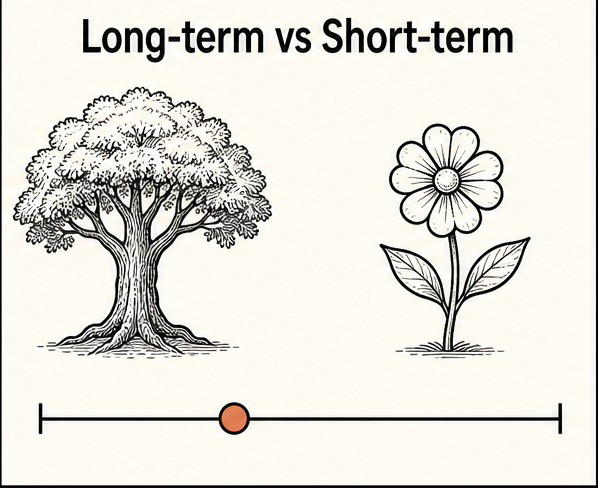
Long-term orientation
UK 51
CN 77
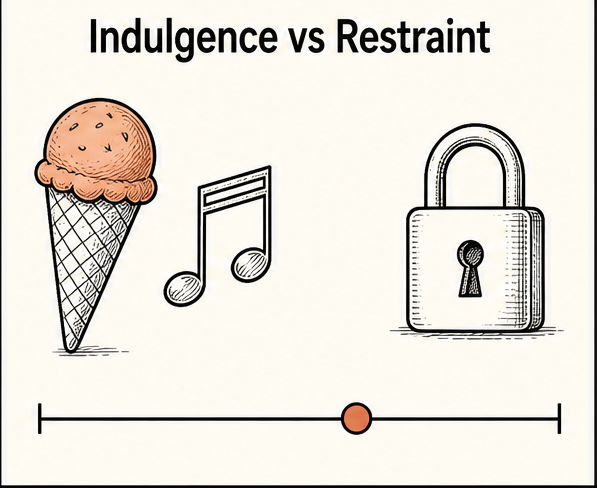
Indulgence
CN 24
UK 69
Scores from theculturefactor.com, retrieved May 2026 · scale 0–100.
GLOBE — what counts as good leadership?
Anglo
Charismatic
Participative
Humane
Team-oriented
Autonomous
Self-protective
Germanic Europe
Autonomous
Charismatic
Participative
Humane
Team-oriented
Self-protective
Confucian Asia
Self-protective
Team-oriented
Humane
Charismatic
Autonomous
Participative
Southern Asia
Self-protective
Charismatic
Humane
Team-oriented
Autonomous
Participative
Sub-Saharan Africa
Humane
Charismatic
Team-oriented
Participative
Self-protective
Autonomous
Charismatic — inspires through vision and values.
Team-oriented — builds cohesion and shared purpose.
Self-protective — status-conscious, face-saving; shields leader and in-group.
What stands out in each cluster (House et al., Culture, Leadership and Organizations, 2004). 5 of 10 clusters shown. Next slide shows the underlying numeric scores.
GLOBE — the absolute scores
Bar = cluster score on the 1–7 endorsement scale ·= 10-cluster average
Anglo
Germanic Europe
Confucian Asia
Southern Asia
Sub-Saharan Africa
Charismatic
6.05
5.93
5.63
5.97
5.79
Team-oriented
5.74
5.62
5.61
5.86
5.70
Participative
5.73
5.86
4.99
5.06
5.31
Humane-oriented
5.08
4.71
5.04
5.38
5.16
Autonomous
3.82
4.16
4.04
3.99
3.63
Self-protective
3.08
3.03
3.72
3.83
3.55
Charismatic — inspires through vision and values.
Team-oriented — builds cohesion and shared purpose.
Self-protective — status-conscious, face-saving; shields leader and in-group.
Cluster means from House et al., Culture, Leadership and Organizations (2004), Table 21.5. 5 of 10 clusters shown.
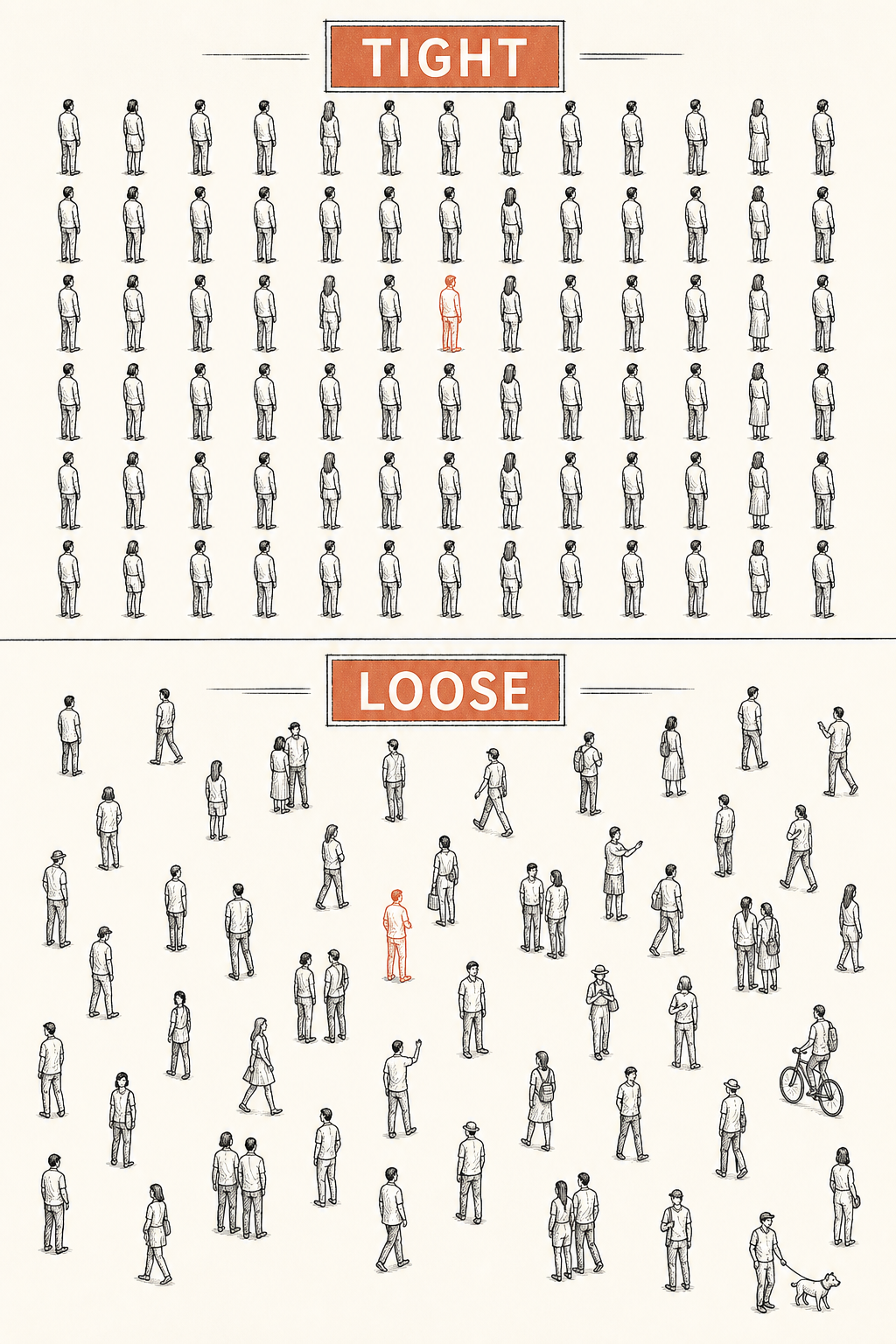
Gelfand — how much room is there to deviate?
Tight cultures enforce social norms strongly; deviance is sanctioned quickly. (e.g., Japan, Singapore, Pakistan)
Loose cultures tolerate a wider band of behaviour. (e.g., Netherlands, Brazil, New Zealand)
China scores relatively tight — but the data is from before 2015. Is that changing in younger urban cohorts?
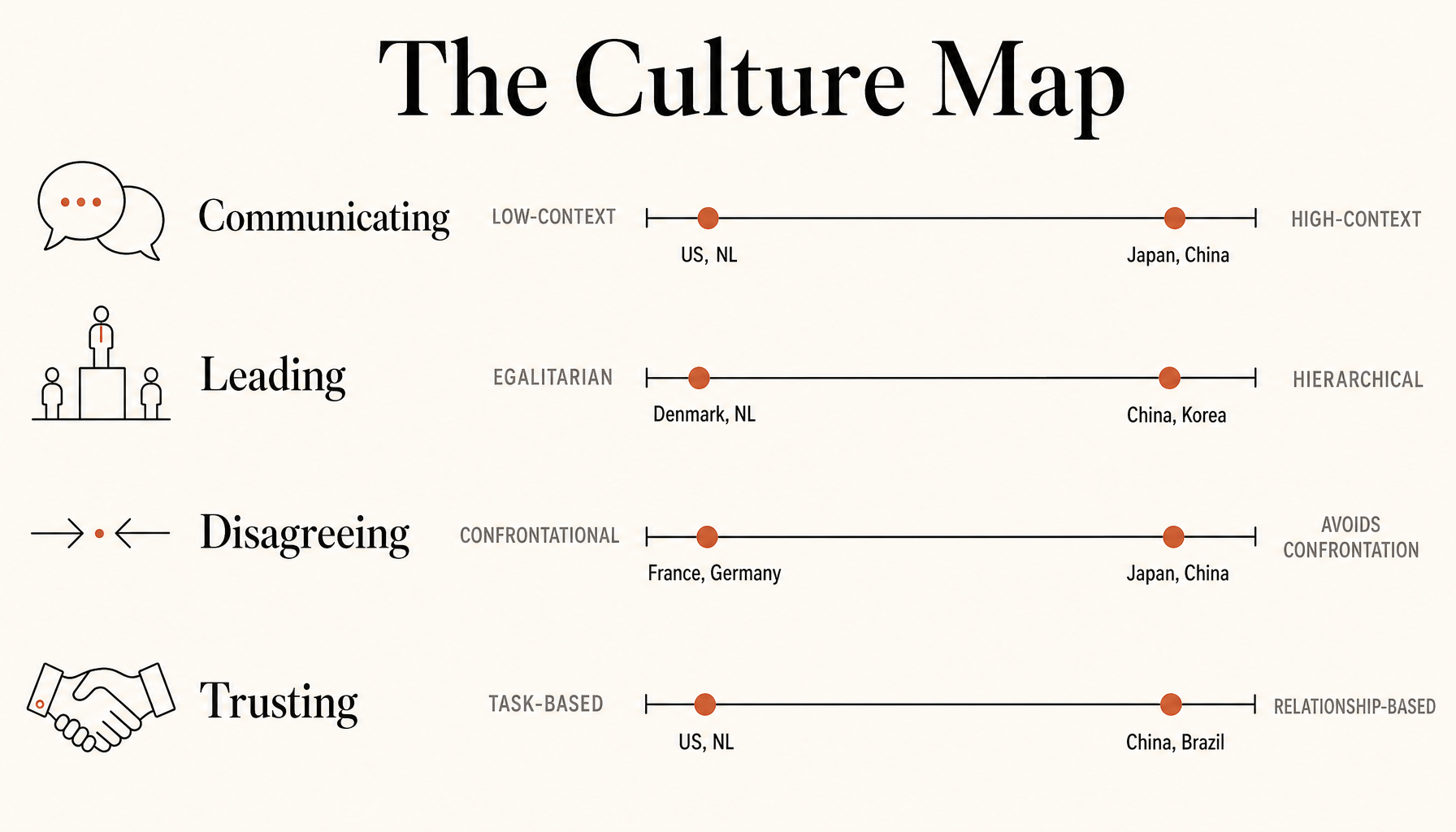
Meyer — the Culture Map
Eight behavioural scales — practitioner-built, four shown. Positions are illustrative, not a measured dataset.
Four frameworks, four vibes
Hofstede
霍夫斯泰德
Six numbers per country. Comparable, blunt, ageing.
GLOBE
全球研究
Focused on leadership. Practices vs values. Directly HR-applicable.
Tightness–looseness
紧–松
How much variation a society tolerates. Newer, narrower.
Culture Map
文化地图
Eight behavioural scales, read in pairs. Practitioner-built.
Chunk 2 of 3 · ~45 min
The Hofstede prediction game
Can the scores tell you what's happening in the room?
What you'll have in front of you
A scenario
One paragraph describing a workplace miscommunication or HR failure in a specific country. Every group gets a different one.
A score sheet
Hofstede scores for the country in the scenario, side-by-side with China. Six dimensions, scale 0–100.
Group Task小组任务20:00
· 4 per group
Your task
Use the Hofstede scores to predict what's happening in the scenario — and what the scores can't explain.
What to do
Read the scenario and the score sheet. Underline anything that surprises you.
Write two short paragraphs: (a) what the scores predict, (b) what they miss.
Choose a spokesperson for a 90-second share-back.
Report-back反馈~90s per group
Share
What did the scores get right? What did they miss?
How we'll do it
Spokesperson: 90 seconds. Country + one prediction + one limit.
I'll cluster recurring limits on the board.
Other groups: build on patterns you also saw.
Chunk 3 of 3 · ~45 min
What the frameworks miss
And why culture is only half the story.
Ecological fallacy
生态谬误
Treating a group average as if it applied to every individual in the group.
Saying "Chinese employees are collectivist" because the country score is 43 — when an individual in front of you might well be at 80.
Four limits of frameworks
One number per country
Within-country variation is huge — regional, generational, individual.
Frozen in time
1970s IBM data, patched but not refreshed. Hofstede argued culture is stable — generational data says otherwise.
A Western lens
Built from Anglo/Dutch academia. What was not asked?
Culture ≠ institutions
Many "cultural" differences are really legal or political.
Culture is one lens. Here are three more.
Law法律
Mandatory works councils in Germany. At-will employment in the US. Dual-track unions in China. HR cannot opt out of legal frames.
Labour markets劳动力市场
Tight or loose? Surplus or shortage? Do workers get to choose? Shapes what HR can demand and what it must offer.
Political economy政治经济
Liberal vs coordinated vs state-influenced capitalism. Influences whose interests HR is permitted to serve.
Walmart in Germany — a $1bn lesson
95 stores acquired 1997–98 (Wertkauf, Interspar) · Exited 2006 · Sold to Metro at an estimated $1bn loss
The surface — cultural irritants
Mandatory morning chants and warm-up exercises — staff refused, found them infantilising.
Greeters smiling at every customer — read as insincere; sometimes mistaken for flirtation.
"10-foot rule" — greet any customer within 10 feet. German shoppers found it intrusive.
US-based head ran meetings in English; refused to learn German.
The cause — institutional collisions
Works councils (Betriebsrat) sidelined — Mitbestimmung makes co-determination mandatory.
"No-dating" ethics code struck down by Wuppertal labour court (2005).
Predatory pricing to undercut Aldi/Lidl — blocked by the Bundeskartellamt.
Slow, reluctant recognition of the Ver.di union; repeated strikes followed.
Culture names the symptoms. Institutions name the cause.
Group Task小组任务15:00
· 4 per group
Scenario
A Chinese tech company expanding to São Paulo hires a consultant who tells them: "Adapt to high power distance and collectivism — Brazilians will respond like Chinese employees do." What's wrong with this advice?
What to do
Find as many distinct problems with this advice as you can. Use today's concepts.
Suggest one thing the company should do instead.
Hint: São Paulo Card 2 showed one version — what changes when the parent is Chinese?
Panel hides: labour law, generational shift, within-country variation.
Brazil vs China — the data you have
Power distance
BR 69
CN 80
Individualism
BR 36
CN 43
Achievement
BR 49
CN 66
Uncertainty avoid.
CN 30
BR 76
Long-term orient.
BR 28
CN 77
Indulgence
CN 24
BR 59
Meyer · Trusting both relationship-based
Meyer · Disagreeing BR more confrontational than CN
Gelfand BR loose · CN tight
Report-back反馈30s per group
Share
One problem with the consultant's advice — your sharpest one.
Group presentations — your groups and your case
How groups formed
Randomly assigned, 5–6 per group. List will be online by end of day.
Your case
Each group has a multinational HR scenario. Case details will be online by end of day.
First milestone
A 1-paragraph problem statement, due before Session 5.
Next session
Communication & feedback
If performance means different things in different places — what happens when you sit down to tell someone how they're doing?