HRM304 · Skills sessions

Audit · Pitch · Negotiate

Lukas Wallrich · Birkbeck, University of London
Visiting Lecturer · SWUFE · May 2026

Three parts

Skill 1 · Audit a system. Three job ads, one company, three cities. Evaluate the language; predict the applicant pool; consider AI screeners.
Skill 2 · Pitch to a room. Two broken HR systems. 90 seconds plus one panel question. Warm-up for the assessed group presentation.
Skill 3 · Negotiate one-to-one. JV staffing negotiation in pairs. Diving deeper into negotiation tactics.

Skill 1 of 3

Gender-coded ad audit

Where does bias live once the explicit form is banned? Three ads, one lexicon, one LLM screener.

Agentic
行动型
Vocabulary about individual action, competition, and independence: ambitious, competitive, dominant, driven, lead, fearless. In job ads, agentic words reduce female applicants' sense that they fit in, without affecting men. (Gaucher, Friesen & Kay, 2011)
Communal
协作型
Vocabulary about cooperation, care, and connection: collaborate, support, considerate, understand, trust, commit. Communal words raise women's sense that they fit in, without affecting men. Removing he/she from the ad is legal compliance: the bias lives in adjectives and verbs.

Two complications before you code

The lexicon doesn't translate cleanly. In English research loyal · commit · modest are coded communal. In Chinese corporate ads, 忠诚 / 投入 / 谦虚 read as non-gendered or masculine-coded virtues — paired with toughness, not warmth. Ad C will be the test.
Explicit discrimination was legal in China until 2019. Ads could say "men only" or ask about marital status. The Ministry of HR notice banned the phrases; pools integrated within weeks. The screening pressure may persist in subtler signals — aesthetic requirements, age limits, and the linguistic ones you are about to code.

Three ads · same role · three cities

Ad A · San Francisco

Global Management Trainee, Silicon Valley leadership track.

Ad B · London

Global Management Trainee, European commercial team.

Ad C · Shenzhen HQ

Global Management Trainee, headquarters rotation programme.

ByteNova — fictional Chinese tech firm. Same role across all three offices. Full text is on your handout.

Code the ads 编码三则广告 20:00 · in pairs

Why we're doing this

Find out which ads invite whom — and which don't.

QR to Skill 1 ad-audit materials Materials & questions — interactive or PDF: swufe-cchrm.pages.dev/b3

Two halves

  1. ~15 min · code the three ads. Mark agentic and communal words, fill the coding sheet.
  2. ~5 min · LLM screener. Three questions; talk them through with your partner.
Share-back 课堂分享 10:00 · whole room

Four short rounds

I'll call on pairs. Be ready to say briefly what you found.

In order

  1. Ratios. Which ad came out most agentic? Most communal? Where did Ad C land?
  2. Ad C. Does collectivist language make a high-intensity culture gender-neutral?
  3. Trait or task. Which ad asks who you are — and which asks what you can do?
  4. The LLM. What did you put in the blank on the thought-experiment card?

What to take from Skill 1

An English lexicon breaks on Chinese ads. Loyal · commit · modest read as corporate virtue, not warmth. (Gaucher et al., 2011; Jiang et al., 2023)
Collectivist words may not soften a hard culture. Ad C pairs modest · commit with drive · fearless — the demands stack, not balance.
Once explicit bias is banned, it shifts into subtler signals — and into the screener. LLM CV audits show lower salary recommendations for female-named candidates. (Gao et al., 2026)
Ad language → who self-selects → CV vocabulary → LLM shortlist. Each step encodes the previous.

Skill 2 of 3

HR redesign pitch panel

Two broken HR systems. Pitch one specific change. Take one sharp panel question.

The frame

Two broken HR systems. A translated US annual review running in Shenzhen. A Hofstede-based cross-cultural induction that landed as stereotyping.
Diagnose, then propose one specific change to the structure. Change the channel, the timing, the criteria, the people in the room — not "communicate better" or "train managers more".
Rehearsal for your assessed presentation. 90-second pitch + question roughly models the opening minute of your 9-minute group talk and its Q&A.

Two scenarios

Scenario 1 · LumiTech Shenzhen

Translated US annual review. Six months in: ratings cluster at 3, high-performers leaving. The calibration meeting is where managers negotiate ratings between themselves.

Scenario 2 · Hofstede pushback

Cross-cultural induction built on Hofstede dimensions, for Chinese hires at a European HQ. Trainees say the framing treats them as archetypes; two have declined the next module.

Your pitch · four parts

What's broken. One specific failure mode — not a list of three.
What changes. One concrete change to the structure — not a friendlier rewrite.
Who pays the cost. Whose job is harder, whose face is at risk, whose budget shrinks. If nobody pays, nothing has changed.
What evidence backs it. One source from sessions so far. Name it.
Roles: writer drafts · 1–2 present · someone who didn't present answers.

Panellists · your job Option A

Put yourself in the role of HR decision-makers. Listen across three pitches and ask the question that would push each design to improve.
Listen for structural vs cosmetic. Did the pitch change the channel, the timing, the criteria, the people in the room — or just the wording?
Decide together. After the three pitches, the panel decides which approach to prioritise.
Prep 分组准备 13:00 · both tracks in parallel

Two tracks at once Option A

Pitchers draft a 90-second pitch on paper. Panellists run the huddle: 3 min on non-negotiables, then 4 min alone and 6 min together to plan questions.

QR to Skill 2 materials Open your role — pitcher or panellist, scenario 1 or 2: swufe-cchrm.pages.dev/b4

Reminders

  1. One sheet of paper per group. Bullets only.
  2. The answerer should not be a presenter.

Everyone pitches Option B

Everyone is in a pitching group of 3–4.
Multiple pitches per scenario. 90-second cap, same four parts.
After each pitch: 1–2 questions, from the room or from me. The answerer is not a presenter.
Prep 分组准备 13:00 · in groups

Draft your pitch Option B

Each group drafts a 90-second pitch on paper. Use the four-part structure — what's broken, what changes, who pays, what evidence.

QR to Skill 2 materials Open your scenario brief — ignore the panellist briefs online. swufe-cchrm.pages.dev/b4

Reminders

  1. One sheet of paper per group. Bullets only.
  2. The answerer should not be a presenter.
Pitches 陈述

Pitching groups present in order. After each pitch: 1–2 questions, then the answerer responds.

Format

  1. Each pitch: 90s delivery — I call time, hard cap.
  2. 1–2 questions after each pitch.

What to take from Skill 2

The broken thing is rarely just behaviour. It's usually who hears what, when, and with what consequence. Pick the right lever.
Structural beats behavioural. "Be more approachable" is a wish. "A 15-minute monthly meeting with the boss's boss" is in the calendar.
Frameworks become stereotypes when the room can't push back. Dimension scores describe distributions; quoting them at individuals needs a channel for "that's not me". (Osland & Bird, 2000)
Lessons for your presentation: keep focus, talk about specific changes, justify trade-offs.

Skill 3 of 3

Retention deal · across one table

The tactical layer beneath Adler's finding, practised in parallel pairs.

What Session 4 showed

Chinese negotiators asked more questions. Adler, Brahm & Graham (1992) with PRC vs US matched dyads.
Both sides did better with problem-solving. Toughness didn't predict joint gains. Information-search did.
Information sharing was the active ingredient. The only norm directly related to joint gains across six cultures. (Adair et al., 2004)
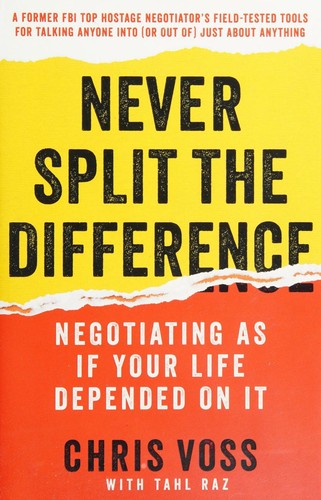
Adler tells you what works. Voss gives you tactical how.

If you read one negotiation book

Book cover: Never Split the Difference by Chris Voss
Chris Voss
Never Split the Difference (2016)
Grow the pie. Splitting the difference is rarely the best deal. Ask what the other side actually needs — there is usually more to share than the visible number.
Tactical empathy. Mirror their last words. Label what you think you're hearing ("it sounds like…"). People move once they feel understood.
Calibrated questions. Open with "How can we…?" or "What about this works for you?" Hands them the problem to solve with you, not against you.
A practitioner book, not peer-reviewed — but built on the same information-sharing logic as Adler.

The scenario · post-merger talent retention

Side A · ZhongFu (Shanghai)

Chinese EV firm that just acquired Helion. You are HR Director Wu Jianxin. CEO's brief: "keep the talent — but do not overpay."

Side B · Helion (Vienna)

Austrian EV powertrain firm, just acquired. You are CHRO Stefanie Kühn. A €40M bonus only pays out if the senior twenty stay — lose them and the money is gone.

One package, five terms: equity · role guarantees · reporting lines · rotations · redundancy.

Six tactical moves

Mirror. Their last words, as a question. "…across the senior twenty?"
Anchor. Ambitious, specific opener. "24-month no-redundancy, €22M equity."
Label. Name what you hear. "It sounds like the equity number is the problem, not the principle."
Linked trade. Move on X only if they move on Y. "Longer role guarantees → we move on equity."
Calibrated question. How / what, not why. "What would make this package one your CEO can defend?"
Walk-away signal. Name your alternative. "If we can't agree today, this goes to the audit committee."
Silent reading 阅读简报 05:00 · in pairs

Before you negotiate

Read your own brief silently. Do not show it to your counterpart. Each side knows things the other doesn't. As you read, note your non-negotiable priorities and what you'd rather not volunteer.

QR to Skill 3 briefs landing page Pick your side — Wu Jianxin (Side A) or Stefanie Kühn (Side B): swufe-cchrm.pages.dev/b5
Negotiate 谈判 15:00 · pair

Your task

Reach a retention package both CEOs can ratify — or walk away. Use at least three of the six moves.

Constraints

  1. You may negotiate in any language the pair both speak comfortably.
  2. One agreement per pair. Verbal is fine — no paper to hand in.
  3. Walk-away is a legitimate outcome. It is one of the six moves — but consider what comes next.
Pair debrief 两人复盘 05:00 · still in pairs

With your counterpart

Discuss which specific tactics helped the negotiation — and what, if anything, hindered it.

Share-back 课堂分享 05:00 · whole room

How did it go?

Hands up. Tell us briefly what happened in your pair.

Questions

  1. Which of the six moves shifted things the most for you?
  2. What did a how or what question give you that a yes/no would not have?
  3. Did any pair trade across issues — "we move on X if you move on Y"? What did you get from it?

What to take from Skill 3

Information sharing is the active ingredient. Pairs that asked questions found the deal. (Adler, Brahm & Graham, 1992)
The deal lives in items neither side has on the public agenda. Bargaining over the equity number missed the real prize — the audit committee's wish about the CFO and the CTO's interest in a Shanghai line.
Today was the retention layer of an M&A deal. The deal-terms layer — price, equity, board seats — sits next to it in S6.

The three-skill thread

Skill 1 · Audit a system. Systemic critique. You read three ads and one LLM screener as parts of one loop, and saw where the bias lives once the explicit version is banned.
Skill 2 · Pitch to a room. Institutional design. You proposed one specific change to a broken HR system, and a panel pushed you to defend it.
Skill 3 · Negotiate one-to-one. Interaction. You shaped a retention package by asking the right question, across one table.
Systemic critique → institutional design → interaction. Three scales. Same skill: notice what's not being said.

What's next

Reflection prompt

On the assessment portfolio page. Pick the skill that surprised you most.

Assessed presentation

9 min + 3 min Q&A. Skill 2 discipline, six times bigger.

Session 6 → M&A

Skill 3 logic at firm scale.