Expatriate management & international staffingwho you send, why, and what happens when they return
Lukas Wallrich · Birkbeck, University of London
Visiting Lecturer · SWUFE · May 2026
Today, in three parts
Who do you send abroad, and why?
Vocabulary for staffing choices — PCN, HCN, TCN — and what shapes the real decisions firms make.
Assignment success isn't 'did they stay?'
A widely-cited statistic that turns out to be a myth, and what the evidence says actually counts as success.
Culture fit vs culture add
Who even gets considered for an (international) assignment, and why the same people keep getting picked.
Chunk 1 of 3
Who do you send abroad, and why?
Paired Share配对分享04:00
Discuss
Someone you know who has moved for work — across provinces in China, abroad, or yourself. What was the one thing about the transition that mattered most, for better or worse?
What to do
Pair with the person next to you.
2 minutes each way.
I will call on 2–3 pairs.
PCN · HCN · TCN
PCN 母国员工
Parent-country national. From HQ's country.
A Shenzhen engineer sent to Manchester by a Chinese firm.
HCN 东道国员工
Host-country national. From the subsidiary country.
A British plant manager hired by that firm in Manchester.
TCN 第三国员工
Third-country national. From neither.
A Singaporean finance lead recruited into the Manchester office.
The standard vocabulary for staffing decisions in MNCs; each has its place.
EPRG: four orientations to subsidiary staffing
Useful as a diagnostic for this role / this site / this stage — not as a label for the whole firm .
Ethnocentric
Rely on PCNs. Logic: parent-firm tacit knowledge, HQ control, standardisation.
Trap: weak local legitimacy, slow learning from the host country.
Polycentric
Rely on HCNs. Logic: local knowledge, cost, language.
Trap: weak vertical coordination; tacit knowledge doesn't move between sites.
Regiocentric
Staff by region (e.g., one Asia-Pacific talent pool). Logic: regional consistency, mobility within the region.
Trap: the region may not be a meaningful unit for the business.
Geocentric
Best person regardless of nationality. Logic: skill optimisation, global mobility.
Trap: expensive, harder visas, can feel rootless.
Five reasons firms send staff abroad
Control. Make sure the subsidiary does what HQ expects.
Coordination. Connect the subsidiary into HQ's systems, calendars, and people.
Knowledge transfer. Move tacit routines, technology, or process discipline that doesn't travel through documentation.
Leadership development. Build a future senior leader by making them earn it in a hard posting.
Problem-solving. Send someone to fix or stabilise an operation that is in trouble.
The right staffing choice depends on which of these five the assignment is actually for.
Assigned vs self-initiated expatriates: two routes, not substitutes (Suutari et al., 2018)
Assigned Expatriate · AE
Sent by the firm. Enhanced package: tax equalisation, relocation, schooling, language training, hardship allowance.
Defined return. Often a contractual end-date and a role to come back to (in theory).
HQ's terms. Performance expectations and reporting line set in HQ's frame, not the host country's.
Self-Initiated Expatriate · SIE
Moved abroad on their own. Usually on a local contract, local salary, local terms.
Open-ended. May stay indefinitely, may move on. Often deeper local roots.
Weaker firm-level claim. The firm did not pay to put them there — and rarely treats them as part of the same talent pipeline as AEs.
Same label, two different HR designs.
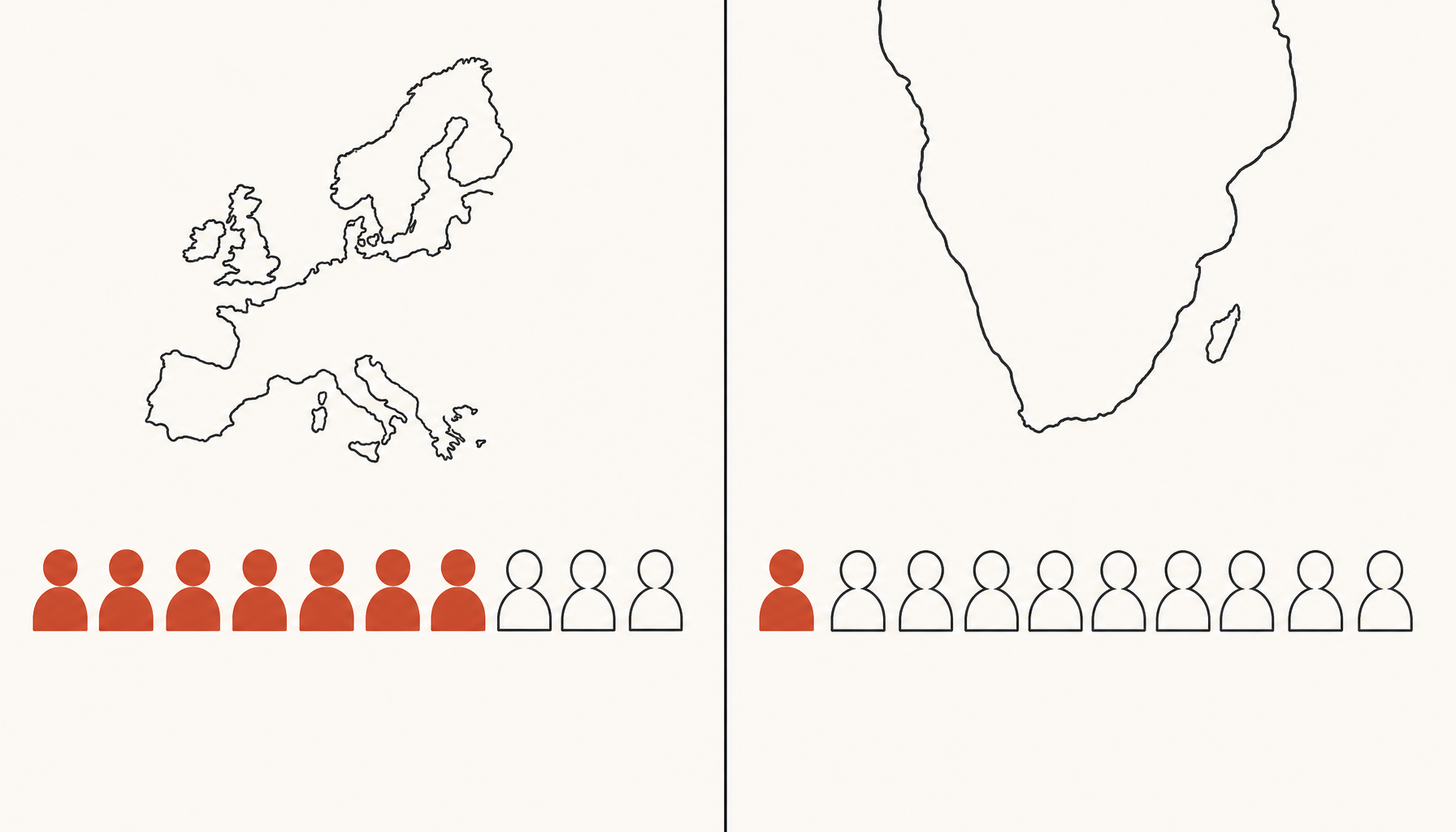
Huawei: same firm, two stories
Europe
~70% local
Huawei's 2022 Europe fact sheet: more than 13,300 employees, 70% hired locally; more than 2,500 staff across 23 research facilities in 13 European countries.
South Africa
~10% local
A 2020 audit found Huawei SA employed ~90% foreign nationals against a permit requirement of 60% local / 40% foreign. Labour-department case settled out of court; by March 2024 the unit reported 57% local.
Locally embedded where the talent pool runs deep; PCN-dependent where it doesn't. Where regulation has teeth, it forces the issue.
Large MNCs stay PCN-heavy until forced to localise
HSBC's "International Officer / International Manager" cadre — a small, mostly British senior cadre, posted from country to country, with elite perks (tax-free pay, housing, lifelong networks formed at an officers' mess in Hong Kong). Explicit ethnocentric staffing for senior subsidiary roles.
Ran for ~160 years. Closed to new entrants in late 2024, under new CEO Georges Elhedery.
A British MNC running explicitly ethnocentric senior staffing for more than a century, and only closing it down now. Large MNCs often stay PCN-heavy until something forces them to localise.
What forces the shift is usually regulation, talent shortages, or cost, not strategic choice.
Staffing Map小组任务10:00
· groups of 4–5
The brief
A Chinese EV firm opens a new European assembly plant in Szeged, Hungary. ~1,000 staff in year 1, ramping to ~4,000 at full capacity. HQ wants the line running within 18 months and has promised 70% local hiring by year 3.
· Plant director
· Quality engineer
· Compliance lead
· Government affairs lead
· HR Business Partner
· Union liaison
· Procurement manager
· Cybersecurity lead
· Finance controller
On A3 paper
For each role, decide PCN or HCN, in Year 1 and in Year 3.
Mark the three roles you found hard. Why was it hard?
Name the top three risks your plan creates.
Nominate a spokesperson.
Report-back反馈~5 min
Share
How many PCN / HCN nationals? What did you discuss?
Questions you might answer
How did you decide?
What was hard?
What risks remain?
Whole-class课堂讨论~3 min
Same firm, different site
Suppose Szeged were not an assembly plant but a battery R&D centre — ~150 engineers, goal is to absorb European battery-chemistry know-how and feed it back to Shenzhen. Which of your year-1 PCN/HCN calls would flip — and why?
Where the scarce expertise sits. HQ ramp playbook vs European labs.
Next: what happens once they're there — and what the literature says about "success".
Chunk 2 of 3
Assignment success isn't 'did they stay?'
Expatriate failure rates: claims vs reality
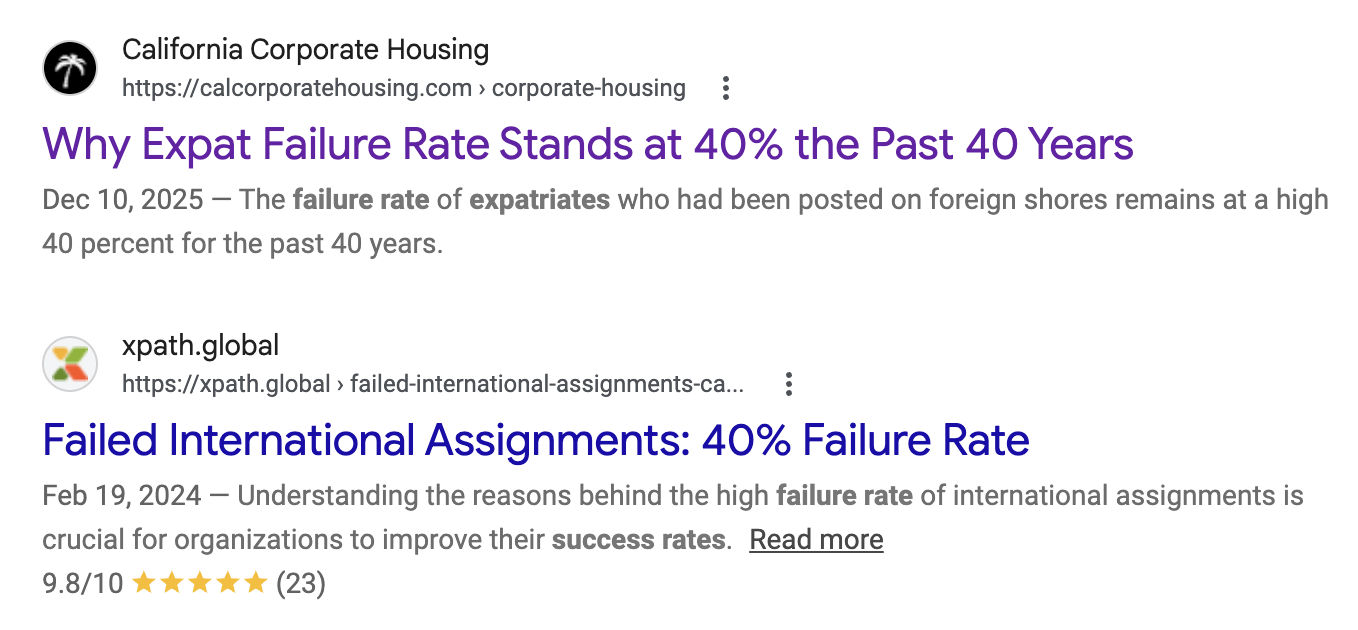
~40% expatriate failure rate
widely cited; not what the data show
… the top search results in May 2026.
Harzing (1995)
The 25–40% figure had no solid empirical base — "created by massive (mis)quotations of three articles." The one with empirical content in fact showed 93% of US firms with failure rates below 20% .
Harzing & Christensen (2004)
Time to abandon the concept. "Failure" was almost always operationalised as premature return — a poor proxy: some early returns are the right call, many genuine failures stay until contract end .
What "success" actually means
Performance
Did they do the job they were sent to do?
Adjustment
Did they (and their family) cope?
Knowledge transfer
Did what they knew move into the local team?
Skill development
Did they grow into someone the firm wants more from?
Retention after return
Did they still work for the firm a year after coming home?
Five dimensions — and none reduces to the others. That's what makes expat management a particularly hard HR design problem.
Family support is the biggest single lever
Family adjustment predicts assignee adjustment. How the spouse and children settle is one of the strongest predictors of how the assignee does at work. The lever isn't the assignee's traits. It's whether the family lands, and firms can support that .
Social support reliably helps adjustment. Host-country mentors, work peers, community contact: effect size varies, sign is stable across studies .
Language is one of the most reliable predictors: firms can train for it before departure, where personality traits are largely fixed.
Easy to over-invest in selection, forget about support, then blame the individual when the assignment falters.
Repatriation: part of staffing, not a travel booking
Returnees often feel their foreign experience is underused. The role they come back to is rarely designed to use what they learned abroad .
Turnover after return is the under-tracked failure mode. A returnee who quits 12 months after a successful (expensive) 3-year assignment is a more expensive loss than someone who came home early. Most firms don't measure it.
Knowledge transfer mostly happens informally. Without structured debrief, the assignee's tacit knowledge — what the host market is really like, where the political risks sit — never reaches the next person sent there.
The HR design move: plan the return before departure. What role? Who debriefs them? Who learns from them?
Support Package小组设计15:00
· groups of 4–5
The brief
Liu Wei · 31 · battery engineer · Shenzhen → São Paulo, 18 months. Mission: localise after-sales diagnostics, train a new service team. Spouse works remotely, worries about childcare for their 6-year-old. Limited Portuguese. HQ wants the package lean — "Brazil has plenty of local EV talent now."Budget cap: 1.5× Liu's Shenzhen salary, total.
Worksheet — twelve items, with hints if you want them:swufe-cchrm.pages.dev/b1
On A3 paper
Classify each item: Essential · Nice-to-have · Cut. Make at least four Cut calls, the budget will not stretch.
Write three success metrics the firm should use at 6 months and at 18 months.
One question you would put to HQ and to Liu before finalising the package.
Report-back反馈~6 min
Share
Spokesperson shares one Essential, one Nice-to-have, one Cut — then talks through one question below.
Questions you might answer
What was hardest to classify?
How would you defend your cuts — to Liu, and to HR?
How would you approach the negotiation with Liu?
We've talked about who you send and how you support them. Next: what shapes who you even consider for an assignment in the first place.
Chunk 3 of 3
Culture fit vs culture add
Who gets considered for the assignment?
Paired Share配对分享04:00
Discuss
A time you saw someone selected — for a job, a team, a programme, even a role in a school play — because they "fit". Did anything get left out by that choice?
What to do
Pair with the person next to you.
90 seconds each way.
I will call on 2 pairs.
Two ways to think about "the right person"
Culture fit · 文化契合
The question: do they match how we already work?
The signal: ease of integration, shared communication style, low-friction collaboration.
The risk: the existing culture becomes the criterion. New perspectives that don't match get filtered out at the door.
Culture add · 文化增量
The question: what do they bring that we currently lack?
The signal: a perspective, network, or experience the team doesn't already have.
The risk: harder to assess, slower to integrate. Without a clear sense of what the team is missing, "add" becomes a slogan, not a criterion.
Panels that say they want "add" often fall back to "fit" by default — because fit can be felt in the room, and add has to be assessed explicitly.
Selection criteria re-encode the last assignee
Criteria often re-encode the last postholder. Women remain ~20% of global assignees; 97% of employers report more men than women on assignment. Panel language — "resilient", "comfortable in tough conditions" — often describes the last assignee, not the role .
"Global leader" templates encode a single profile. Items validated on existing senior leaders (overwhelmingly Western, male, English-native) measure fit-to-template, not capability.
Add looks like: who isn't on this team yet? Name what's missing before the role is opened.
Same logic upstream: job ads, CV screening, AI shortlisting.
Selection Panel小组讨论12:00
· groups of 4–5
The brief
Country Manager · Chinese EV firm · Hungary. Year-1 priorities: localise hiring (HQ has promised 70% local), navigate EU regulatory scrutiny, build regional-government relationships.
Replacing Wang Jiehao — the Wuhan engineer who set up Szeged on Wuhan templates. Trusted by HQ. Local staff stuck around 35%. Now rotating home.
In your group
Pick one candidate. One sentence on fit; one on add.
Name the main opportunities and risks.
Fit vs add: would a different priority flip your pick?
AZhang Jianguo · 52 · Chinese · Plant Director, Wuhan
Ran the Wuhan plant through its last capacity expansion. Trusted by HQ; on the firm's high-potential list. No European experience. Limited English.
BLi Yifan · 40 · Chinese · Regional Lead, São Paulo (same firm)
Localisation track record in Brazil; handled a labour-relations crisis. Good English, no Hungarian.
CEszter Nagy · 47 · Hungarian · COO, German Tier-1 supplier
Local networks, EU regulatory experience. No prior MNC HQ relationship. No Mandarin.
DAnna Wu-Kovács · 30 · Chinese-Hungarian · Budapest + Shanghai MBA
Strategy consultant. Cross-cultural fluency. No line management experience. No industry-specific expertise.
Share反馈~5 min
Share
Your pick, in one sentence on fit and one on add.
Questions you might answer
Did you prioritise fit or add?
What's the gap your pick leaves open — and how would you cover it?
Did anyone change their pick when they flipped fit → add? What would have to be true about the role for you to change?
What culture fit vs culture add gives you
A name for what selection panels default to."We picked them because they fit" is not a neutral statement — it lets the previous postholder, or the team's current way of doing things, become the criterion. Once you can name that default, you can question it.
A question, before you open the role. What is the team missing? Until you can answer, "add" can't be a decision rule.
The same logic at every funnel stage. Ads, CVs, interviews, AI screening — fit/add is the question at each step. Bias isn't only at the last stage.
Three things to carry forward
Staffing is strategic
Who you send is a function of what the assignment is for — not who's available or who looks the part.
Success is multi-dim
Family support, language, repatriation — the parts most firms quietly skip are the ones the literature keeps pointing back to.
Bias starts early
Fit-vs-add is a question for every selection moment, not only the final one.
Looking ahead
Practice
Skill 3: selection-bias review. Bring the fit/add vocabulary.
Reflection
An easy place to start: someone you know who has moved for work — what helped them land, what didn't. Full prompt on the assessment page.
Presentations
Have you started? Bring your overall draft approach and any questions to the first session next week.