When AI enters HR, who governs the tools? Where does a human stay in the loop?
Lukas Wallrich · Birkbeck, University of London
Visiting Lecturer · SWUFE · June 2026
Today, in three parts
People and culture
How AI carries bias, and how its way of writing can change the way a message reads.
A policy choice
What an organisation must decide: adopt a tool, add safeguards, or refuse it — and that changes across borders.
See it, stay in
See if an AI agent can do a real task, then decide where we have to stay in charge.
Think · Pair · Share思考·结对·分享3:00
· in pairs
You are the applicant, or the employee
A company you applied to uses AI to screen your CV and to run your first video interview. No person sees you until later, if at all.
Talk it over
How would that feel — and what would worry you most?
Is there anything about it you would actually prefer to a human?
Chunk 1 of 3
What AI does to people and culture
Where does bias get in, and what does AI's way of writing do to a message?
Algorithmic bias
算法偏见
An AI tool can treat one group unfairly even though no person decided to be unfair. It learns patterns from past data and from the choices its builders made — and those patterns can carry social bias with them.
A few ideas to keep straight
It predicts, it doesn't look up
A chat model writes the likely next words — not a database, so it can be confidently wrong.
Probabilistic, not fixed
Ask twice, get two answers. A trained classifier (a CV screener) is more fixed; a chat model varies.
Black box, not explainable
Often you cannot see why it decided as it did — it matters when it makes an HR decision.
Bias is not noise
Bias is a steady skew against a group; noise is random inconsistency. Both are unfair.
Where bias gets in
The training data. The examples it learns from: who is in them, and who is missing.
The labels. The "right answer" tied to each example. Treat "hired last time" as "good", and it copies the past.
The scoring rule. What the finished tool is told to reward. Score fluent English as "competence", and a strong non-native speaker is marked down.
A "bias-tested" label is not proof. Biased hiring tools also bring legal exposure, not only an ethics problem.
See where bias lives: inside the numbers
To work with words, an AI tool first turns each one into a list of numbers, learned from huge amounts of text. Words that share meaning end up with similar numbers — close together — so the tool can even do arithmetic: king − man + woman lands on queen.
Run the same arithmetic on jobs and it answers doctor → nurse, engineer → man. No one wrote that rule. The tool absorbed it from the text — so the bias is sitting inside the numbers, and any hiring tool built on them carries it without anyone noticing.
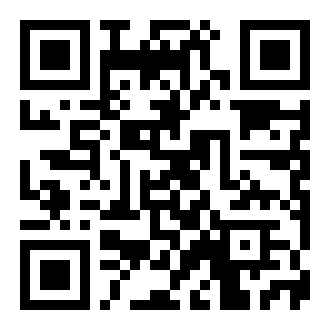
See it live:swufe-cchrm.pages.dev/s10embed
Cultural homogenisation
文化同质化
An AI learns language and cultural style together, fused. So its writing is fluent — and it quietly pulls everyone toward one dominant style, flattening how tone and feedback differ from one culture to another.
Chinese-built models (DeepSeek, Qwen) lean more toward hierarchy and social harmony — a different default, not a neutral one.
You can steer it. Ask a model to answer as someone from a given place and the default shifts — though it can swap one stereotype for another.
These are directions, not exact scores; even measuring cultural tilt is contested.
A person who knows the tilt is there can keep AI's writing on target.
AI can keep the facts and strip the politeness
AI can hold on to what a message says while removing how it says it: the politeness, the indirectness, the context a high-context reader leans on to understand it.
From Session 3. In a high-context setting, how you say something carries as much weight as what you say.
From the ad audit. The wording itself shapes who applies: gendered phrasing quietly narrows the pool.
Live: three intentions, one voice?
Same situation each time: a report came in late, with mistakes. Three managers, three intentions. I'll ask AI to "turn each into a professional email."
Encourage: "the report was a bit late and had a few small mistakes — could you fix them and resend by Friday? thanks so much!"
Warn: "report's late again and full of mistakes. fix it and get it back to me by Friday."
Show I'm unhappy: "late. several errors. resend by Friday."
After the polish, can you still tell which is which?
Same note, change only the name
Now take the warning note and send it twice, changing only the recipient: Bob in our London office, then Qiuhua in our Chengdu office. Same words, same instruction.
Watch the greeting. "Hi Bob", or "Dear Qiuhua"?
Watch the cushioning. Short and direct, or softened with thanks and "review it carefully"?
Helpful adaptation, or a stereotype? You never asked it to choose.
Discuss讨论3:00
· whole class
It erased your intent, then invented a culture
AI flattened encourage, warn and displeasure into one voice. Then it gave Qiuhua a softer, more formal email than Bob, unasked. Helpful adaptation, or a stereotype?
Think about
A reader who can't tell a warning from encouragement: what do they do wrong?
Guessing culture from a name: when does it help, when is it a stereotype? Who decides?
The one human step before any of this is sent.
So a person stays in the loop
Bias gets in through the data, the labels, and the scoring rule.
The writing has a steerable cultural default: it can flatten tone and miss context (especially but not only in translation).
So a person should stay in the loop on anything cultural or consequential — checking, adapting, deciding.
"Human in the loop" means a person reviews and decides before the output is used.
Chunk 2 of 3
Govern it, or it governs you
When a firm runs AI at scale, who sets the rules — and across which borders?
Algorithmic management
算法管理
When software — not a human manager — hands out tasks, scores performance, and enforces rules, at a scale no manager could match.
A food-delivery app that sets each rider's route, delivery time, and rating is algorithmic management at work.
Same job, different algorithm
Chengdu · Meituan / Ele.me
The app sets routes, tight delivery times, and speed scores. Pressure is high, driven mainly by platform labour rules and market structure (not "culture").
London · Uber Eats
Similar app-led dispatch, but looser time pressure, shaped by different worker-classification rules and labour market.
Are there cultural differences beyond the institutions? Economic differences? Let's not overuse culture - but do not deny either.
What "watching work" can look like
Activity tracking. Software logs active time, takes occasional screenshots, and records location at clock-in.
Communication scanning. AI reads staff emails and chats to flag risk — fraud, corruption, or leaks. Common in finance compliance.
Productivity scoring. Keystrokes, app-switching and "focus time" turned into a single performance number.
Each one moves from a guess about who is working to a constant data feed.
Watching work: a real trade-off
AI can track behaviour directly: active time, screenshots, location at clock-in. That can make performance management more evidence-based. The cost is privacy. What counts as acceptable varies by culture and by law.
A monitoring-led approach is not right or wrong — it just will not be accepted everywhere.
Quick pair · 双人讨论3:00
Where would direct monitoring be accepted, and where not — and is that culture or law?
Moving HR data across borders
PIPL. China's Personal Information Protection Law (2021): the rules for personal data in China.
GDPR, and beyond. The EU's data-protection law. California's CCPA / CPRA does much the same, now for employee data too.
More than one at once. Cross a border and several apply to the same HR data.
Employee "consent" is legally weak, so firms rely on legal routes like SCCs (Standard Contractual Clauses), not a signature.
With new options come new restrictions: the EU AI Act
What it is. The European Union's law on AI systems (Regulation 2024/1689). It sorts AI uses by how risky they are.
HR is high-risk. Using AI to hire, score, or monitor staff is classed "high-risk" — so the law requires human oversight and bias testing.
Friction when you expand. A tool a Chinese firm runs legally in Chengdu can be a compliance problem the moment it operates in Munich.
Group Task小组任务12:00
· groups of ~4
Your role
You are the global HR steering committee of a Chinese tech firm opening offices in Europe. Five AI proposals are on your desk — weigh each one.
For each proposal
Write the key benefit(s) and key risk(s).
Decide: Adopt · Adopt with safeguards (name the protection) · Reject (why).
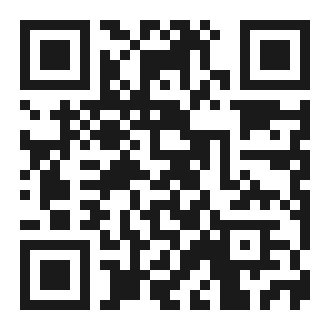
Open the board:swufe-cchrm.pages.dev/s10board
Report-back反馈
How we'll do it
Hand-vote each proposal — Adopt · Safeguard · Reject — then we dig into some disagreements.
What to share
Hands up for each proposal in turn.
For the big splits, some groups explain their perspectives.
One global system keeps getting harder to run
Law differs by place. PIPL, GDPR, the EU AI Act — each market sets its own rules.
Acceptance differs too. What staff will tolerate, from monitoring to data transfer, varies by culture and law.
So firms localise. Increasingly they run a localised stack per region rather than one worldwide tool.
This is another reason for localisation - alongside culture.
Chunk 3 of 3
See it work, and stay in charge
The tools you can actually use, what "agentic" means, and where you keep a person in charge.
Many more, changing fast. The difference that matters is not which one, but how you use it.
Chat. You ask, it answers in the box. Good for a quick question or a first draft, but it forgets, so you re-explain each time.
Agentic. You give it files and a multi-step job. It works the folder — reading, drafting, checking — and saves results as it goes, so the steps stay separate and you do not repeat yourself.
Think · Pair · Share思考·结对·分享8:00
· in pairs
How you actually use AI
Think about how you really use AI — for study, work, or job-hunting. What is most helpful? And what does it get wrong or miss, especially about your own situation?
How we'll do it
Think on your own for a minute.
Tell your partner your example.
We'll hear a few before the demo.
Live demo: an AI agent applies for a job
I'll run a file-based agent on my own CV and a real SWUFE faculty post. It reads the job ad and the CV, interviews me, then drafts a cover letter and a tailored CV.
Capability
Multi-step, working real files, asking me questions — not one chat reply.
The human step
I will need to check - here, very briefly.
Culture
A Chinese CV may carry a photo; a UK-EU one omits them. Which does it pick?
Where a person stays in
AI drafts, a person decides. The output is a starting point, not the final word.
It only knows the context you give it. Missing context is missing judgement.
Check for overreach, bias, and cultural fit — the writing will be ok (though it might "sound like AI").
Never send sensitive HR text without safeguards, and know the law before HR data crosses a border.
On the horizon
Agents that act across systems. Booking, buying, filing across many tools at once, with less step-by-step human input.
Synthetic candidates. AI-generated faces and voices in remote hiring. How to make sure the applicant is real and speaking to you?
Next: bringing it together
Next session
Block 11: exam preparation. We turn the whole module into one toolkit and practise scenarios together.
Your reflection
Today's share and the demo are your material: where AI helped, what it missed, and where you keep a person in. Full prompt on the assessment page.